What is Kurtosis What is Kurtosis

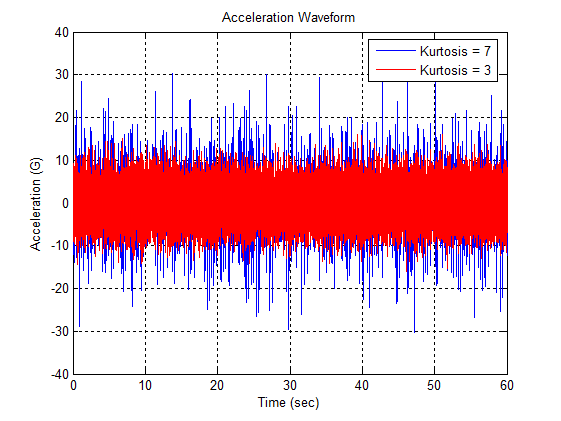
Kurtosis is a statistical parameter that measures the peakedness or flatness of a vibration signal's distribution. The kurtosis value indicates the intensity of impulse peaks and sharp spikes in the signal.

Interpreting Kurtosis

  • A normal distribution (Gaussian signal) has a kurtosis value of 3.
  • Higher kurtosis (>3) indicates sharp peaks concentrated around the mean (more "peaked" distribution).
  • Lower kurtosis (<3) suggests a flatter, more spread-out distribution.

Graphical Analysis

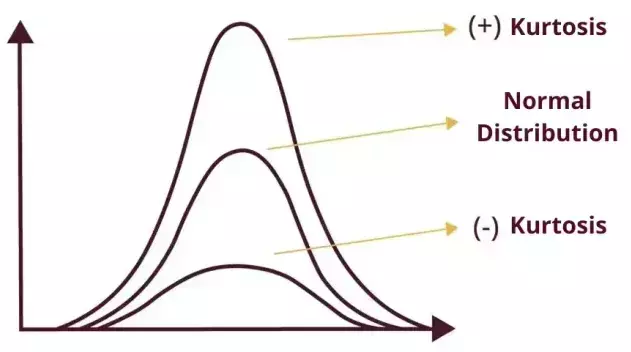
Kurtosis can also be interpreted from the distribution plot of vibration acceleration values:

  • Normal distribution (kurtosis ≈ 3) indicates a balanced, symmetrical signal.
  • High kurtosis suggests signal values are tightly clustered around the mean with sharp impulses.
  • Low kurtosis reflects a wider, flatter distribution of signal values.

Causes of High Kurtosis Values

Kurtosis is particularly useful for detecting early-stage faults in components such as bearings and gearboxes. Abnormally high kurtosis values may indicate:

  • Bearing Defects: Worn or damaged bearings generate high-frequency impulses, increasing kurtosis.
  • Gearbox Faults: Improper gear meshing causes high-frequency vibration, leading to elevated kurtosis.
  • Misalignment: Mechanical misalignment can produce sharp peaks in the signal, raising kurtosis.
  • Mechanical Looseness: Loose components create excessive vibration and impact signals, increasing kurtosis.

Conclusion

Kurtosis is a valuable indicator for early fault detection in vibration analysis. It is particularly effective in identifying impact-related signals in bearings and gear systems. However, for accurate diagnosis, it should be used alongside other time and frequency domain parameters.